How to Create Engaging Art Tutorials for Online Fans
March 6, 2026
The internet is flooded with art tutorials. Yet only a handful of creators manage to build a dedicated community around their content. The difference isn’t talent. It’s a strategy.
Online art tutorials have become one of the most powerful tools for artists to grow an audience, establish authority, and generate consistent income. But creating content that actually retains viewers, and converts them into fans, requires more than pointing a camera at a canvas.
This post breaks down what separates forgettable tutorials from ones that keep people coming back. Whether you’re just starting out or trying to scale an existing channel, these strategies will help you build something that lasts.
Understanding Your Audience
Identifying Skill Levels and Interests
One of the biggest mistakes art educators make online is creating content for “everyone.” In practice, that means it resonates with no one deeply.
Your audience exists on a spectrum. Beginners need reassurance, simple vocabulary, and visible progress within a single lesson. Intermediate artists are hunting for technique refinement and creative problem-solving. Advanced learners want to be challenged — they’re looking for nuance, not hand-holding.
Before creating a single piece of content, define who you’re speaking to. Research trending search terms in your niche. Look at the comment sections of popular tutorials in your space. Ask your existing followers what they struggle with. This isn’t guesswork — it’s positioning.
Understanding Engagement Metrics
Views tell you what people clicked on. Watch time tells you what they stayed for. Comments tell you what moved them enough to respond.
Most creators track surface-level metrics and miss the deeper signals. A tutorial with 50,000 views and a 30% retention rate is underperforming. A tutorial with 8,000 views and a 75% retention rate is doing something right — and that’s the format you should replicate.
Pay close attention to where viewers drop off. That’s where your pacing, clarity, or content depth is breaking down. Use this data to iterate, not just to report.
Planning Your Art Tutorial Content
Strong tutorials don’t happen by accident. They’re engineered.
Start with a single, clear learning objective. Don’t ask: “What do I want to show?” Ask: “What will the viewer be able to do after watching this that they couldn’t do before?” That shift in framing changes everything about how you structure your content.
A reliable tutorial structure follows three stages: a compelling introduction that sets expectations, a focused demonstration that delivers on the promise, and a recap that reinforces key takeaways. This isn’t just good pedagogy — it’s good content design.
Pacing matters more than most creators realize. A tutorial that’s too slow loses advanced learners. One that moves too fast overwhelms beginners. The solution is layering — introduce a concept simply, demonstrate it in real time, then briefly explain why it works. That rhythm keeps a broader audience engaged simultaneously.
Tutorial length should match the platform and the task. YouTube rewards longer, in-depth content. Instagram Reels and TikTok demand tight, punchy delivery. Don’t fight the algorithm, understand it and plan your format accordingly.
Choosing the Right Medium for Tutorials
Video-Based Tutorials
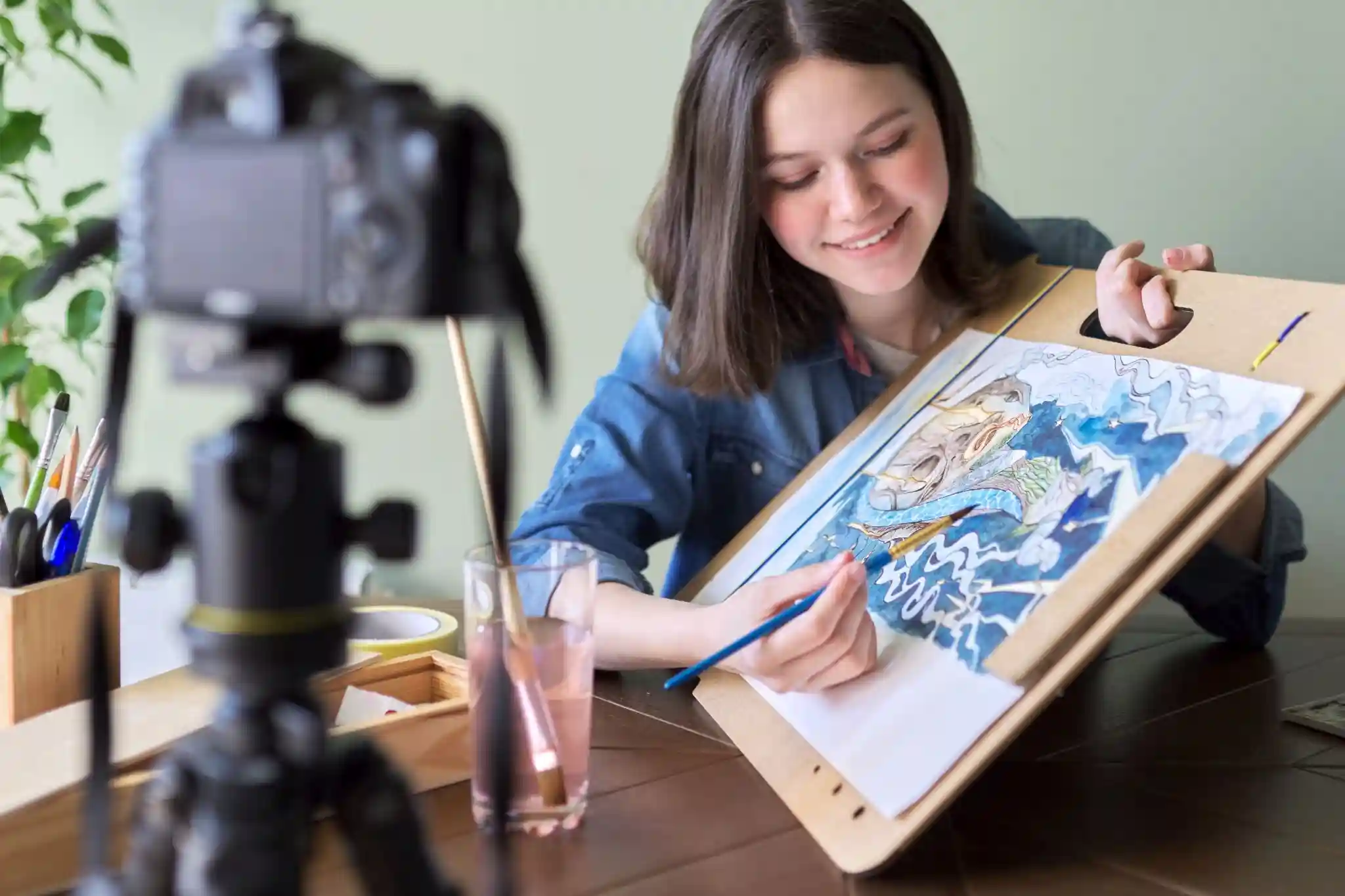
Video remains the dominant format for art tutorials, but not all video is created equal. Poor lighting, shaky camera angles, and inaudible narration kill engagement fast — no matter how skilled the artist.
Invest in a stable overhead camera setup if you work on paper or canvas. Use screen-capture software with clear resolution if you work digitally. Narration should be warm and conversational, not scripted and stiff. Annotations and callouts help viewers track where to focus during complex steps.
Editing is where good tutorials become great ones. Cut dead time ruthlessly. Use jump cuts to maintain energy. Highlight critical moments with zooms or slow-motion replays. Every edit decision should serve the viewer’s understanding.
Written and Visual Tutorials
Written tutorials are underrated. They rank well in search engines, are easy to share, and serve audiences who prefer to learn at their own pace.
Step-by-step image sequences with clear, descriptive captions can be as effective as video, sometimes more so for reference material people return to repeatedly. Diagrams, callouts, and comparison images can communicate nuance that takes three minutes to explain verbally.
Format matters here, too. A blog post benefits from clear headings and a scannable structure. A PDF guide needs a clean layout and print-friendliness. A carousel post on Instagram must deliver value within the first three slides before people scroll away.
Techniques to Make Tutorials More Engaging
Technical skill alone doesn’t build community. Connection does.
Share the story behind what you’re creating. Why does this technique matter to you? What took you years to figure out that you can hand to someone in ten minutes? Personal anecdotes make tutorials memorable. They also make you human — and that’s what turns viewers into followers.
Challenges and exercises are one of the most underused engagement tools. Prompt viewers to try a technique and share their results. Feature community work in your next video. This transforms passive watching into active participation and creates a feedback loop that sustains momentum.
Breaking complex tasks into small, clearly named steps removes the intimidation factor. Don’t assume viewers know what you know. Label every phase. Name every tool. Anticipate confusion before it happens.
Humor and inspiration aren’t extras — they’re retention mechanisms. A well-timed self-deprecating joke or a moment of genuine excitement can re-engage a distracted viewer better than any editing trick.
Tools and Software for Creating Art Tutorials
You don’t need expensive equipment to start. You do need the right tools for your format.
For video, OBS Studio is a powerful free option for screen recording. DaVinci Resolve handles editing with a generous free tier. For traditional media, a Logitech C920 webcam overhead or a simple ring light setup can produce clean, watchable footage without a large investment.
For written and visual tutorials, Canva handles graphic layouts quickly. Adobe Illustrator or Affinity Designer are stronger for detailed diagrams. Procreate on iPad is excellent for creating step-by-step demonstration images.
Hosting platforms each have their own strengths. YouTube maximizes long-term discoverability. Instagram and TikTok drive short-term reach. A blog or Substack builds an audience you own, one that isn’t subject to algorithm changes. Ideally, your strategy spans multiple platforms while treating one as your primary hub.
Promoting Your Art Tutorials Effectively
Creating great content is half the job. Getting it seen is the other half.
SEO is non-negotiable for written tutorials and YouTube content. Research the exact phrases your target audience types into search engines. Use those phrases in your titles, descriptions, and headers — naturally, not stuffed. Thumbnails and titles should create curiosity while accurately representing the content.
Social media promotion works best when it’s native to each platform. Don’t just drop a YouTube link on Instagram. Create a short teaser clip. Post a single striking result image. Tell a story in your caption that creates a reason to click through.
Collaboration is one of the fastest ways to grow. Find artists in adjacent niches — not direct competitors — and create something together. Each creator brings their audience, and cross-pollination builds reach that organic growth alone can’t match.
Most importantly, use engagement feedback as a content roadmap. Comments are research. When five people ask the same follow-up question, that’s your next tutorial brief.
Common Mistakes to Avoid in Online Art Tutorials
The most common reason tutorials fail isn’t poor production quality — it’s information overload. Trying to cover everything in one video leaves viewers overwhelmed and less likely to finish.
Clarity is also frequently sacrificed for speed. Narration that races ahead of the demonstration, camera angles that obscure the key action, and instructions that assume prior knowledge all create friction that causes viewers to click away.
Ignoring feedback is a slow-burning mistake. Comments, DMs, and community polls are a direct line to what your audience needs next. Creators who ignore these signals become irrelevant faster than they expect.
Finally, don’t let your tutorials stagnate. Art tools evolve. Techniques improve. Returning to older content and updating it — or creating revised versions — signals to your audience that you’re invested in giving them your best.
Measuring Success and Iterating on Tutorials
Sustainable growth comes from honest analysis, not vanity metrics.
Track views, watch time, click-through rates, and comment volume. But also track qualitative signals: what are people saying in the comments? What questions keep surfacing? Which tutorials get shared most often, and why?
Run experiments deliberately. Try a different format for four weeks. Adjust your thumbnail style. Change your intro length. Measure the results against a control. This is how data becomes insight rather than noise.
Consistency in voice and visual branding builds trust over time. Viewers should be able to recognize your content within seconds — from your thumbnail style, your color palette, your editing pace, or your opening phrase. Branding isn’t just aesthetics. It’s reliability.
Conclusion
Building a loyal audience around your art tutorials is a long game. It rewards patience, consistency, and a genuine commitment to serving your viewers.
The strategies in this post — from audience research and content planning to promotion and iteration — aren’t a one-time checklist. They’re an ongoing practice. The creators who grow the most sustainably are the ones who keep refining their craft, listening to their community, and evolving their format as platforms and audiences change.
Start with one improvement. Improve your pacing. Add a challenge at the end of your next tutorial. Research the keywords your audience is actually using. Small, consistent changes compound into significant results.
Your knowledge is valuable. The right strategy makes sure the right people find it.
Leave a comment